Marijuana Strains
Marijuana Strains
Things You Should Know About Marijuana Strains
Marijuana Strains
Marijuana Strains genus' two species are Cannabis indica and Cannabis sativa. A third Marijuana Strains, Cannabis ruderalis is extremely short and creates only trace amounts of tetrahydrocannabinol (THC), and thus is not generally grown for recreational, industrial or medicinal use. However, because Cannabis ruderalis flowers independently of the photoperiod and according to age, it has been utilized to breed a bloom strains.
Marijuana Strains
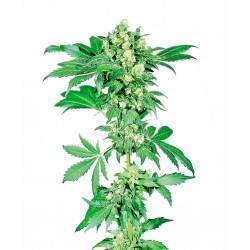
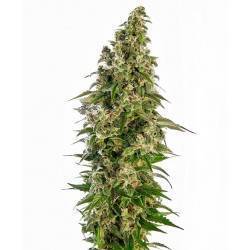
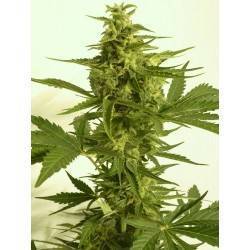
Marijuana Strains Pure sativas are comparatively tall (reaching as high as 4.5 meters), with long internodes and branches, and big, narrow-bladed leaves. Pure indica varieties are shorter and bushier, have leaflets that are wider. Indoor growers for their size often favor them. Sativas blossom later than indicas, often taking a month or two more to mature. The subjective effects of indicas and sativas are believed to differ, but the ratio of tetrahydrocannabinol (THC) to cannabidiol (CBD) in named drug varieties of both kinds is similar (averaging about 200:1). Unlike most commercially developed strains, indica landraces exhibit plants with varying THC/CBD ratios. Avidekel, a medical marijuana form developed in Israel, has a high content of CBD although an extremely low content of THC, maximizing medical effect although limiting its recreational value.
Marijuana Strains
As well as pure indica, sativa, and ruderalis options, hybrid varieties with varying ratios of these three types are typical. Like, the White Widow cross containing about 40% sativa ancestry and 60% indica. These hybrid varieties exhibit traits from both parental types. There's also commercial crossbred hybrids which are usually autoflowering options, and contain a mix of both indica ruderalis and/or sativa genes. "Lowryder" was an early on auto-flowering hybrid that retained the flowering behavior of ruderalis flowers, while making appreciable amounts of THC and CBD. Autoflowering cannabis varieties have the advantage of being subtle because of the small stature. Additionally they need shorter obtaining the additional advantage they don't rely on an alteration within the photoperiod to determine when to flower, together with growing times.
In legal markets, including in Amsterdam, competition puts strain on breeders to produce increasingly attractive versions to keep up marketshare. Breeders give their strains unique and different names so that you can help differentiate them from their rivals' ranges, while they may actually be very similar.
Marijuana Strains
Common pressures are incorporated into new hybrids, which regularly bear the same name with their parent. This phenomenon has happened amongst others, with Bitter and Haze kinds.
Blackmarket cannabis dealers sometimes falsely advertise their goods to be of a particular strain to capitalize on name or that pressures success.
Breeding involves pollinating a female marijuana plant with male pollen. Although this happens automatically and ubiquitously in nature, the intentional design of new options typically involves selective breeding in a controlled environment.
While cannabis is grown for therapeutic qualities or its psychoactive, male plants may also be separated from females. This prevents the fertilization of the feminine flowers, both even to give more control over which man is chosen or to accomplish sinsemilla flowering. Pollen made by the male saved and is caught until it is required.
These offspring won't be similar to their parents. Instead, they'll have characteristics of both parents. Repeated reproduction leads to specific traits showing with greater frequency.
Marijuana Strains
A common strategy to strengthen a cannabis range is named "cubing". A breeder seeking certain traits in the hybrid offspring (like, better resin production or tighter node space) can breed hybrid plants most exemplifying these qualities using a parent plant. This process is known as cubing because it usually repeated across three, or possibly more decades before the genetics of the selection are adequately stable.
Selfing
Selfing will be the capability to get a plant to create vegetables without the help of another place. This refers to hermaphrodite flowers that self- pollinate. There is no such thing like a ‘gene pool’ or population close to hermaphrodites since the only pollen a hermaphrodite use could be the pollen that it generates itself. Both male and female flowers are found on a single plant. There might be variations within the offspring.
It's impossible to get a hermaphrodite to make any male plants that are only. A hermaphrodite might produce female hermaphrodite and only seeds vegetables. Furthermore the female only seeds may carry the hermaphrodite characteristics.
Marijuana Strains

Subcategories
-

Indica
Cannabis Indica
There is only one species in the genus "cannabis", although three are commonly spoken: sativa, indica and ruderalis.
These are actually subspecies, but each one has particular characteristics that differentiate them, and that make them chosen by growers throughout the world according to what they try to achieve. However, being in fact the same species, they can cross without problems, which has led to innumerable hybrids with a greater or lesser proportion in their genetics of one or the other. The two most popular varieties are sativa and indica, since ruderalis is low in THC, although thanks to its shorter cycle, it integrates in a percentage the autoflowering varieties.
TELL ME WHAT CLIMATE DO YOU HAVE AND I'LL TELL YOU WHAT TO PLANT
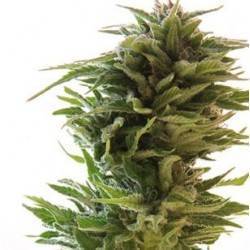
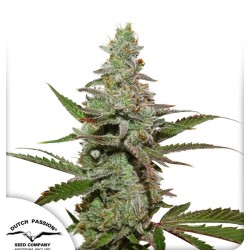
Many of the differences between indica and sativa can be justified by their places of origin and the climates to which they are accustomed. Indica varieties come from the Central Asian region and the Indian subcontinent (Pakistan, Afghanistan, India, Tibet, Nepal, etc.). Coming from mountainous areas, they are more resistant to low temperatures and extreme climates. The indica, increase their height by 50 or 100% during flowering. They are more robust and compact, with denser and heavier buds. In addition, in the indica they usually grow in the form of clusters around the knots of the stem and the branches. They have the widest leaf and are accustomed to having good light and heat for less time, so they have a quicker flowering, of about 45 to 60 days.
AND HOW DO THEY AFFECT US?
The effect of the indica and sativa varieties is different. Indicas contain more CBD and less THC than sativas, and produce what many call "high." They are ideal to jump to play the playstation or to do a marathon of some series (yes, one that does not require so much concentration). They produce relaxation and alter the senses, particularly touch, hearing and taste. In high doses, they are directly soporific. Ideal for a night without plans or when looking for a state of total relaxation.
-
Sativa
Sativa Cannabis Guide
People have cultivated Cannabis sativa throughout recorded history as a source of industrial fibre, seed oil, food, recreation, religious and spiritual dispositions, and medicine. Each portion of the plant is picked differently, depending on the function of its use. The species was initially classified by Carolus Linnaeus in 1753.
Cannabis sativa on average, has higher levels of CBD when compared with THC, whereas Cannabis indica has higher levels of THC to CBD. However, tremendous variability exists within either species. There are three chemotaxonomic types of Cannabis: one with high levels of THC, one which has higher levels of CBD and is more fibrous, and one that's an intermediate between the two.
Cannabis forms with comparatively high CBD:THC ratios are less likely to cause anxiety than vice versa. Sativa's consequences are well-known for its cerebral high, while indica is well known for its sedative effects which some prefer for night time use. Both kinds are used as medical cannabis. Indica plants are generally shorter and stockier than sativas. C. sativa have a dense and compact flower cluster and broader, deeply serrated leaves. The impacts of indicas are sedative and mainly physical.